nature listening station

Every place
has a voice.
Now you can hear it.

A solar-powered station listens to your land — identifying birds at dawn, bats at dusk, and logging weather conditions — and publishes a live website with AI naturalist field notes. No mains power, no WiFi, no engineer required.

See a live station →
Loading…

AI Naturalist

Your land, given a voice.

Every morning, the AI Naturalist reads the night and dawn's detections and writes a field note — what arrived, what it means, what to watch for. Not data. A story.

🌿 AI Naturalist — example field note
Friday 4 July 2026 · Dawn field note

The chorus opened at 03:51 this morning — a Common Chaffinch cutting through the pre-dawn stillness eleven minutes before sunrise. By the time the light arrived, seventeen species had joined in, the damp air carrying sound further than usual through the alders.

A Eurasian Blackcap was heard for the first time this season — a significant moment for this site. Their scratchy, fluty song dominated the mid-canopy from 04:10 onwards. Jackdaws arrived late but loudly, as is their habit, the sky above the wood filling with their flat, carrying calls by half past five.

The night brought two bat passes consistent with Common Pipistrelle along the woodland edge — the first recordings of the week. Worth listening for again tonight.

Common Chaffinch147 detections
Eurasian Blackbird89 detections
Eurasian Blackcapfirst of season ✦
Common Pipistrelle2 bat passes
📖
Written at dawn, every day
The AI Naturalist reads every detection from the past 24 hours and writes a fresh field note each morning — what species arrived, when the chorus peaked, anything unusual or seasonal.
🦅
Genuinely contextual
It knows the location, the season, the species expected — and flags when something unexpected appears. A Blackcap arriving early. A species not heard for weeks. Context that turns data into meaning.
🌐
Published to your station page
The field note appears on your station's public website automatically. Share the link with guests, embed it in your own site, or print it for a notice board. The story of your land, updated daily.
🦇
Birds and bats, together
The Naturalist covers both — the dawn bird chorus and the dusk bat emergence. Over months and years, it builds a picture of seasonal patterns unique to your location.

What heardhere logs

More than detections.

Every station captures a continuous, timestamped record of acoustic activity at your location. Over time, this becomes a genuinely valuable ecological dataset.

🐦
Birds
Species identification (3,000+ species)
Detection time and confidence score
Hourly and daily activity patterns
First detection of the season per species
Dawn chorus timing vs sunrise
Multi-year comparison as records build up
🦇
Bats
Species identification at 384kHz
Pass count and activity level
Dusk emergence timing
Activity along habitat edges
Seasonal presence tracking
Audio recordings preserved
🌦️
Weather (optional)
Temperature and humidity
Wind speed and direction
Rainfall
UV index and solar radiation
Correlated with acoustic activity
Historical weather records
Your station gets its own URL
yourstation.heardhere.uk
See all live stations →

How it works

Mount a mast. Get a website.

The whole system is self-contained — power, connectivity and intelligence built in. You mount it, we handle the rest.

Step 1
📡
Mount the station
A weatherproof enclosure mounted on a mast, fence post, or tree stake. The solar panel charges the battery. On first power-up, a simple setup page on your phone walks you through configuration — no engineer required.
Step 2
🎙️
It listens continuously
Two microphones run in parallel — a standard microphone for birds at 48kHz and an ultrasonic microphone for bats at 384kHz. BirdNET identifies birds at dawn; BatDetect2 identifies bats at dusk.
Step 3
☁️
Data goes to the cloud
Every 15 minutes, detections are uploaded over 4G to Cloudflare's global network. No local server, no storage to manage. Data is retained indefinitely — your station builds a long-term record.
Step 4
🌿
The AI Naturalist writes
Every morning, it turns the night and dawn's detections into a field note — see how that works above.
Step 5
🌐
Your station goes live
A public website at yourname.heardhere.uk shows live detections, the AI Naturalist field note, species lists, and activity charts. Share it, embed it, or link it from your own site.
Always
📊
We watch every unit
A fleet dashboard monitors every station's battery level, signal strength, and detection activity. We know if something goes quiet before you do — and we'll be in touch.

Who it's for

Built for people who care about a place.

Anyone who manages, stewards, or loves a piece of land — and wants to know what lives there.
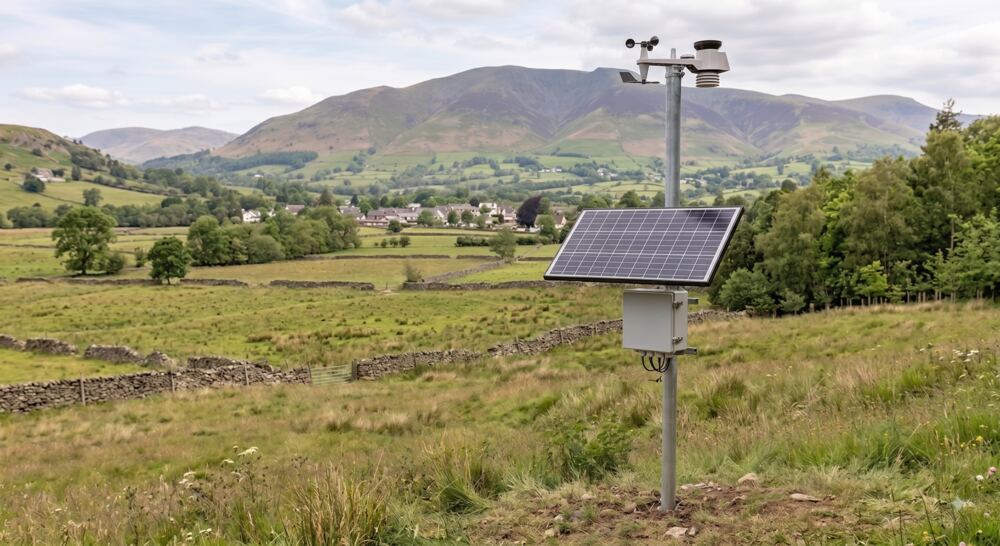
Illustrative concept: a solar-powered heardhere station on a hillside nature reserve
Illustrative concept render, not a real installation
Nature reserves & conservation
Continuous monitoring without effort
Track species arrivals across seasons. Generate public-facing data for funders and supporters. The AI Naturalist writes the story of your reserve — automatically, every morning.
Suitable for Friends of groups, community nature reserves, and wildlife trusts looking for accessible citizen science data.
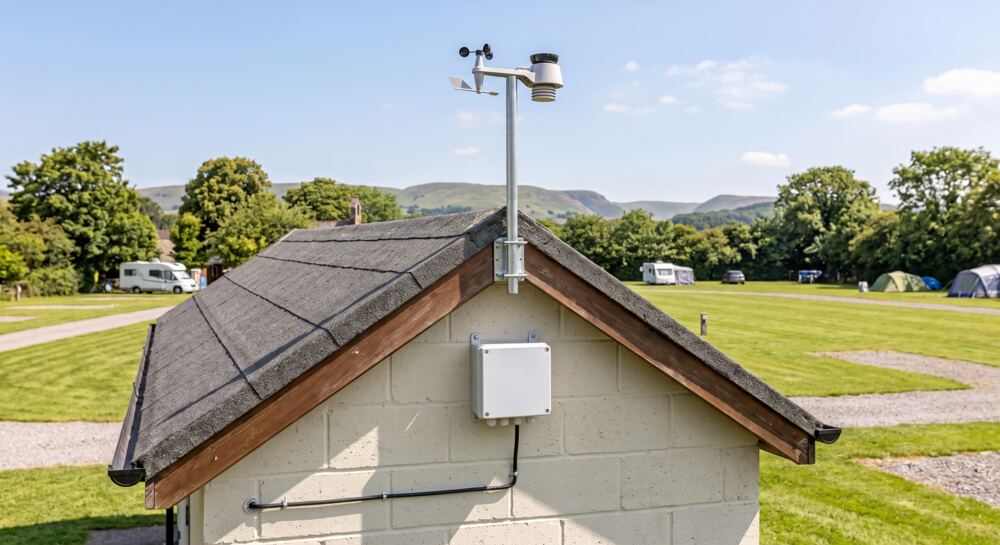
Illustrative concept: a solar-powered heardhere station mounted on a campsite building
Illustrative concept render, not a real installation
Campsites & glamping
A reason to come back
Share last night's bat count with guests at breakfast. Show the dawn chorus on the farm website. A heardhere station turns the natural world around your site into a living amenity.
Example: "17 species heard this morning including a first-of-season Blackcap — all logged at ghyllhead.heardhere.uk"
Landowners & estates
Know what's really on your land
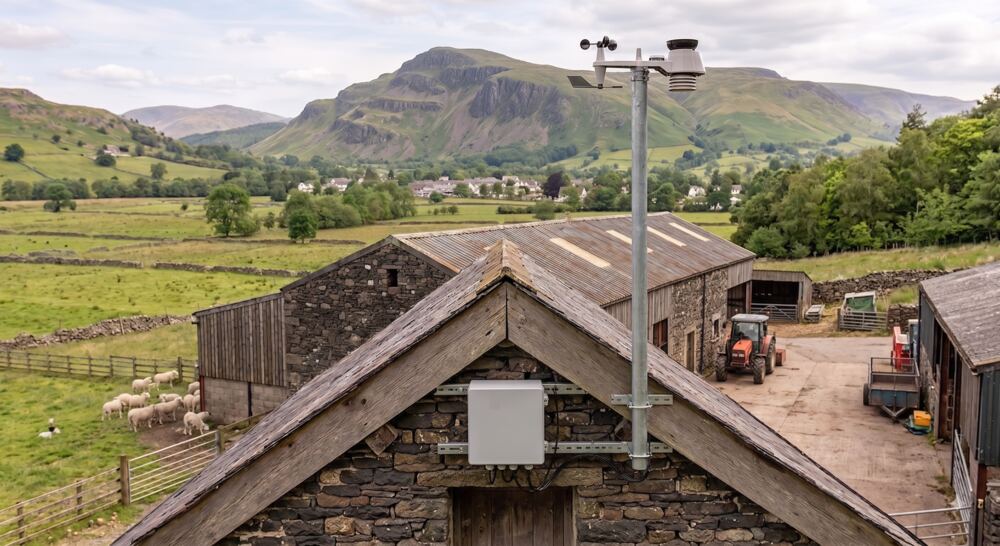
Genuine insight into what wildlife actually uses the land you own — not a guess. Bat records matter before any development, felling, or building work, since bats are a legally protected species. A long-term ecological record with real value if land use ever changes.
A private station page, or a shareable public one — entirely your choice at setup.
Housing developers
Real evidence for Biodiversity Net Gain
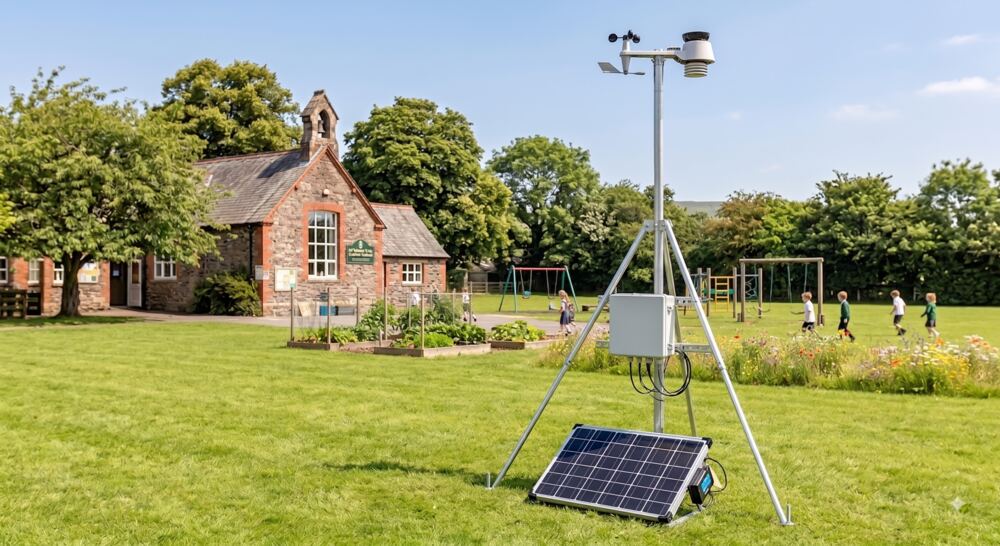
Continuous, dated monitoring data to support Biodiversity Net Gain requirements on a development site — ongoing evidence, not a single ecologist visit. Since you typically only need coverage for the project period, seasonal rental is often a better fit than buying outright.
Rent for the length of the project — planning application through to post-development monitoring.
Reports

Turn detections into a document.

Pick a date range, pick who it's for, and get a written report — hard data plus an AI-written summary — ready to print or save as a PDF. Generated from the owner dashboard, up to 10 a month included.

📄
Biodiversity Net Gain evidence
Written for planning & BNG submissions
Monitoring coverage % included as evidence
Protected-species (bat) activity by night
Explicitly not a substitute for an ecologist's assessment
🌾
Farm & stewardship scheme evidence
For Countryside Stewardship / SFI records
Bat activity framed as a pest-pressure indicator
Bird diversity framed as a habitat indicator
Modest, clearly-hedged interpretation, not overclaimed
🏡
Landowner & funder update
A warmer update for trustees or supporters
Celebrates standout species and arrivals
Grounded in the real numbers, not oversold
Suited to annual reports and grant reporting
📋
General summary
A quick narrative of any date range
Standout species and patterns, not a raw dump
Good for a monthly check-in on the record
Same underlying data as the others, lighter tone

What our customers say

heardhere stations are deployed across the UK — on nature reserves, smallholdings and community green spaces.

* Testimonials are illustrative examples based on real use cases. heardhere is an early-stage product — contact us to discuss your site.

"We've had bats on site for years but never known what species. Within the first week the station detected Greater Horseshoe Bats — a genuinely surprising and significant record for this part of Cumbria. The daily field notes from the AI Naturalist have become part of our morning routine."
Sarah Whitmore
Reserves Manager · a Cumbrian nature reserve
"I put a heardhere unit on the edge of our touring field facing the hedgerow. Our guests love checking the website in the morning — seeing what was singing at 4am while they were asleep. It's become a genuine selling point. We're booked out most of the summer."
Tom Aldridge
Owner · Riverside Camping, Somerset
"We installed a unit on the allotment boundary in March. By June we'd recorded 34 bird species and confirmed Pipistrelle bats hunting the aphids over our brassicas every evening. The data has been brilliant for our planning grant application — solid ecological evidence, beautifully presented."
Priya Mehta
Chair · Hartington Road Allotment Association, Sheffield

Citizen science

Every station contributes to something bigger.

As data builds up, each heardhere station reveals how weather shapes wildlife activity at that specific place. Warmer nights bring more bats. Cool still mornings produce stronger dawn choruses. Rain reduces species heard.

🦇
Bats vs temperature
Nightly bat passes plotted against temperature — revealing the thermal threshold at which bats emerge at your site.
🌕
Moon phase and lunar phobia
Some bat species avoid bright moonlight. Your station tracks whether local populations show lunar phobia.
🌅
Dawn chorus intensity
How does overnight temperature affect the strength of the morning chorus? Cool still nights typically produce the most vocal dawns.
📅
Phenology tracking
Every station keeps a running record of each species' first-detected date, visible from day one on its Birds and Bats pages. Genuine year-on-year comparisons — whether a species is arriving earlier or later than before — only appear once a station has enough continuous, reliably-monitored seasons behind it to say so honestly, typically from its third year.

All of this analysis happens automatically as your station accumulates data. No spreadsheets. No manual uploads. Just a listening station doing science — and we'd rather tell you a comparison isn't ready yet than show you one we can't stand behind.

Bat correlations apply to stations with bat monitoring enabled (Birds & Bats or Birds, Bats & Weather tiers). Weather correlations use your station's own sensor where fitted, or a nearby forecast estimate where it isn't — either way, always clearly labelled which.


Pricing

Start with what you need.

Every unit monitors birds and bats as standard. Weather and a wildlife camera are optional add-ons, so you only pay for the sensors your site actually needs. All tiers include the station website, AI Naturalist, fleet monitoring, and data retention. Choose your own connectivity and power setup — WiFi, Ethernet, PoE, or 4G; USB power, PoE, or solar & battery — at checkout. No hidden costs.

Own it
From £660
one-off hardware + from £18/month platform fee
Buy the unit outright. Deploy it yourself with our simple setup guide. We handle the cloud platform, AI Naturalist, and fleet monitoring.
Birds-only from £660, Birds & Bats from £815, Birds, Bats & Weather from £1,185
Choose WiFi, Ethernet, PoE, or 4G connectivity
Choose USB, PoE, or solar & battery power
Station website at yourname.heardhere.uk
AI Naturalist field notes, daily
Off-device data storage, retained indefinitely
Fleet health monitoring
Wildlife camera available as an optional add-on at checkout or any time after — heardhere-supplied and pre-configured from £350, or bring your own and we'll send you the setup steps. Configure your station →
Partner
Price on request
per month per unit
For conservation organisations and nature reserves deploying multiple units. Subsidised hardware, data API access, and white-label embed for your website.
Everything in Own it
Multi-unit fleet dashboard
Data API access (JSON/CSV)
White-label embed widget
Volume pricing on hardware
Get in touch to discuss your requirements — we'll build a package that works for your organisation.
📶
Choose your connectivity. Pick WiFi, Ethernet, or PoE and connect to your own network — the £18/month platform fee covers hosting, the AI Naturalist's daily write-ups, and secure off-device storage. Or pick 4G and we provision and manage the SIM for you, with the data itself included in the £20/month fee — no separate network contract for you to arrange.

About us

Built in the Lake District.
Designed for the places that matter.

heardhere grew out of a community nature project in Threlkeld, beneath Blencathra in the Northern Lake District — and a shared passion for birds. What began as a way to share local wildlife data with residents and spark curiosity about the natural world on our doorstep became something more useful: a platform for anyone who wants to know what's happening in their patch, without needing to be there.

We combine open-source acoustic AI — BirdNET for birds, BatDetect2 for bats — with a solar-powered, 4G-connected unit that can run indefinitely in the field. Every morning, an AI naturalist reads the night's detections and writes a field note. Every detection is logged, searchable, and presented through a clean live website.

We're a small team based in Cumbria. We care about making nature data accessible — not just to ecologists and researchers, but to landowners, community groups, schools, and anyone who wants to listen more carefully to the places they love.

🌿
Open science, not black boxes
We use and support open-source tools. The acoustic models that power heardhere are freely available to researchers worldwide. We just make them easier to deploy.
📍
Made for the UK
Designed and tested in Cumbria. Species libraries, seasonal context, and the AI naturalist's voice are all calibrated for British wildlife and habitats.
🦇
Birds and bats, together
Most monitoring tools focus on one group. heardhere covers the full acoustic day — dawn chorus to dusk bat emergence — in a single unit.
Get in touch

Interested in a heardhere unit?

Tell us about your site — we'll get back to you within a couple of days.